Dear Sir,
While I readily commend your efforts to work with the Republicans of New York’s State Legislature with regard to spending cuts and caps on property tax increases, these measures, though prudent, do not sufficiently address the primary causes of New York’s mounting public debt. It is my intention, as well as those of the cosigners of this letter, to offer you an overview of what we, of the Eastern Smithtown Republican Club believe to be the surest path to our state’s economic redemption. An active display of government leadership is essential to the achievement of this goal and you sir, as leader of the Empire State, must assume this role.
First and foremost, no state can produce significant revenue without an expansive and flourishing tax-base. New York State’s loss of revenue as a result of migration over the course of the past decade is astonishing to say the least, and is largely responsible for the growing debt that presently riddles our state.
It is up to you, Governor Cuomo, to offer an honest assessment and a sober contemplation of the roots of our citizens’ discontent. After all, New York is surely one of the greatest states within our union, so why are droves of people leaving? Manhattan and its suburbs of Long Island, with robust traditions of commerce and stellar reputations for ingenuity, have long been the envy of other states, yet vast numbers of businesses have continually been fleeing these locations. Why have states such as North Carolina, Georgia, Florida and Texas suddenly become so attractive to countless numbers of former New York residents? The overwhelming majority of problems presently facing New York may all be attributed to one simple, yet pervasive word - Taxes.
With the highest top marginal individual and corporate tax-rates in the nation, New York’s citizenry can no longer afford to live in the state which they love for its rich traditions of commerce and trade, yet despise for its debilitating and convoluted government policies. With state payroll taxes, gas and energy taxes, capital gains taxes, property taxes and sales taxes among the highest in America, New York’s corporations and small business owners have given up faith in the state that once represented, and in fact contributed to, the making of the American Dream.
In short Governor, in reaction to the extraordinary burdens placed upon the populace through excessive taxation and regulation, New Yorkers and the businesses they own are presently seeking refuge elsewhere. And with them go their property taxes, their sales taxes, their income taxes and their payroll taxes. With them go the jobs they once created, their capital for reinvestment and their proclivity for commerce and trade.
Governor Cuomo, we implore you to take a leap of faith in the American system of free enterprise and competitive economics, and to cut the chains now binding New Yorkers to what has essentially become a state-sponsored economy. The implementation of across the board tax-cuts at roughly 15% of current levels is all that is necessary for you to regain a thriving population, to keep your constituents within the state and to promote their prosperity and wealth. This, in turn, will produce for the state far greater revenue than it has managed to collect in decades. Lower tax rates inevitably lead to growing populations, to more robust economies and to greater business success. This, in turn, will lead to an influx of money within the state and, if coupled with responsible spending, will surely result in a balanced budget and the eventual solution to our state’s vexing problems regarding unfunded liabilities.
Your cautionary measures, Governor, regarding new tax levies and spending have been admirable, if not remarkable. However, now is the time to take positive action and to create a climate for economic growth via free and competitive commerce. Lessen the tax-burden on our citizenry, and allow your constituents a chance to prove the innate ingenuity and exceptional resource of New York’s populace when unencumbered by the excesses of the state.
Sincerely,
Jeremy Pitcoff
Tuesday, May 17, 2011

Monday, February 14, 2011
American History Of Words
In honor of Presidents Day, it is only fitting that we take a moment to pay tribute to the defining qualities of our nation’s history that have led to its unprecedented brand of exceptionalism. The history of America is, above all else, a history of words and vision. Throughout the ages, our leaders, heroes and political thinkers have possessed the unique ability, via writing and oratory, to define their respective generations.
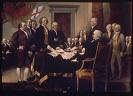
Virtually every political conviction that I now embrace was inspired by the majestic words of America’s Declaration of Independence. The history of mankind was literally transformed with the opening paragraphs of this timeless, literary masterpiece. A new nation, born of human rights, boldly pronounced that these rights were not theirs alone, but the self evident truths of all mankind, endowed by their creator. Thus, from the onset of the nation, American words were bigger than America itself. This infant nation was to lead the world into an era of freedom and liberty by the sheer force and eloquence of its rhetoric.
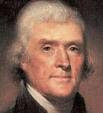
Having won the revolution and having established a constitution unique to the annals of history, these newly united states were drawn into a period of introspection. The war of words that ensued would influence American policy for the better part of a century. The letters submitted by Thomas Jefferson and Alexander Hamilton to President George Washington concerning the establishment of a Bank of the United States represent the most complete and intriguing arguments for and against government expansion in American history to date. While the luxury of hindsight allows for my preference of the Jeffersonian, small government model, Hamilton’s arguments are incredibly persuasive and explain the virtues of centralized government better than any politician of the modern era.
When Jefferson became President, his pride in the nation that he helped to form rendered him morally incapable of participating in the age old practice of paying tribute to North Africa’s Barbary Pirates. In what became America’s first war on terror, Jefferson refused to offer blackmail money to the Muslim states of Morocco and Tripoli for allowing American merchants the “freedom” of passing their coasts without risk of molestation or attack. Stephen Decatur, the hero of what became known as the Barbary Wars, and later a champion of the War of 1812, epitomized the newfound sense of American nationalism with his famous banquet toast: “Our Country! In her intercourse with foreign nations, may she always be in the right, but our country, right or wrong.”
This sense of unity, however, proved ephemeral as the tensions between the American North and South began an inevitable drift toward war. John C. Calhoun of South Carolina, Andrew Jackson’s former Vice President, made clear the fragility of American nationalism with his movement to nullify federal tariff laws by any means deemed necessary, up to and including secession. President Andrew Jackson used the power of words in the no-nonsense style of the American West, to bury the flames of rebellion: “Our Federal Union! It must be preserved.” President Jackson’s commanding language served to diffuse the immediate crisis and delay civil war for another quarter of a century.
By the year 1860, these North-South tensions would come to a head, sparking a war that would result in more American fatalities than the sum total of Americans killed in all other conflicts from 1776 to the present. Abraham Lincoln, the Northern leader of that civil war, reestablished the meaning of America, with words as timeless as the principles he was attempting to preserve. In his brief address at Gettysburg, Pennsylvania, Lincoln spoke of a nation “conceived in liberty, and dedicated to the proposition that all men were created equal.” He brought new meaning for some, and solidified the meaning for many, of the war they were gallantly fighting. That the soldiers who had perished in that war had given their “last full measure of devotion,” not in vain, but in the promotion of human liberty, was a quintessentially American theme. Lincoln ensured, through his literary genius, that the meaning of this tragic conflict would not be diluted through time.
From Franklin Delano Roosevelt’s “Day of Infamy” speech – “We will gain the inevitable triumph, so help us God,” to John F. Kennedy’s acceptance of full responsibility in the Bay of Pigs debacle – “Victory has a thousand fathers, but defeat is an orphan,” to Ronald Reagan’s final assault on Soviet Communism – “Mr. Gorbachev, tear down this wall,” America’s past can best be viewed through the prism of its orators and writers. These words offer us the wisdom of the past and hold the key to our nation’s future.
In the late 20th and early 21st centuries, America has witnessed an educational shift toward international studies. Our public schools, at the behest of the federal Department of Education, have placed less emphasis on the history of American words, concentrating instead on our nation’s global impact. This neglect of American history is shortchanging our nation’s youth, for it is depriving them of the lessons of the past, thus leaving them less prepared to meet the challenges and crises of the future. An overhaul of our priorities is in order.
Jeremy Pitcoff
Virtually every political conviction that I now embrace was inspired by the majestic words of America’s Declaration of Independence. The history of mankind was literally transformed with the opening paragraphs of this timeless, literary masterpiece. A new nation, born of human rights, boldly pronounced that these rights were not theirs alone, but the self evident truths of all mankind, endowed by their creator. Thus, from the onset of the nation, American words were bigger than America itself. This infant nation was to lead the world into an era of freedom and liberty by the sheer force and eloquence of its rhetoric.
Having won the revolution and having established a constitution unique to the annals of history, these newly united states were drawn into a period of introspection. The war of words that ensued would influence American policy for the better part of a century. The letters submitted by Thomas Jefferson and Alexander Hamilton to President George Washington concerning the establishment of a Bank of the United States represent the most complete and intriguing arguments for and against government expansion in American history to date. While the luxury of hindsight allows for my preference of the Jeffersonian, small government model, Hamilton’s arguments are incredibly persuasive and explain the virtues of centralized government better than any politician of the modern era.
When Jefferson became President, his pride in the nation that he helped to form rendered him morally incapable of participating in the age old practice of paying tribute to North Africa’s Barbary Pirates. In what became America’s first war on terror, Jefferson refused to offer blackmail money to the Muslim states of Morocco and Tripoli for allowing American merchants the “freedom” of passing their coasts without risk of molestation or attack. Stephen Decatur, the hero of what became known as the Barbary Wars, and later a champion of the War of 1812, epitomized the newfound sense of American nationalism with his famous banquet toast: “Our Country! In her intercourse with foreign nations, may she always be in the right, but our country, right or wrong.”
This sense of unity, however, proved ephemeral as the tensions between the American North and South began an inevitable drift toward war. John C. Calhoun of South Carolina, Andrew Jackson’s former Vice President, made clear the fragility of American nationalism with his movement to nullify federal tariff laws by any means deemed necessary, up to and including secession. President Andrew Jackson used the power of words in the no-nonsense style of the American West, to bury the flames of rebellion: “Our Federal Union! It must be preserved.” President Jackson’s commanding language served to diffuse the immediate crisis and delay civil war for another quarter of a century.
By the year 1860, these North-South tensions would come to a head, sparking a war that would result in more American fatalities than the sum total of Americans killed in all other conflicts from 1776 to the present. Abraham Lincoln, the Northern leader of that civil war, reestablished the meaning of America, with words as timeless as the principles he was attempting to preserve. In his brief address at Gettysburg, Pennsylvania, Lincoln spoke of a nation “conceived in liberty, and dedicated to the proposition that all men were created equal.” He brought new meaning for some, and solidified the meaning for many, of the war they were gallantly fighting. That the soldiers who had perished in that war had given their “last full measure of devotion,” not in vain, but in the promotion of human liberty, was a quintessentially American theme. Lincoln ensured, through his literary genius, that the meaning of this tragic conflict would not be diluted through time.
From Franklin Delano Roosevelt’s “Day of Infamy” speech – “We will gain the inevitable triumph, so help us God,” to John F. Kennedy’s acceptance of full responsibility in the Bay of Pigs debacle – “Victory has a thousand fathers, but defeat is an orphan,” to Ronald Reagan’s final assault on Soviet Communism – “Mr. Gorbachev, tear down this wall,” America’s past can best be viewed through the prism of its orators and writers. These words offer us the wisdom of the past and hold the key to our nation’s future.
In the late 20th and early 21st centuries, America has witnessed an educational shift toward international studies. Our public schools, at the behest of the federal Department of Education, have placed less emphasis on the history of American words, concentrating instead on our nation’s global impact. This neglect of American history is shortchanging our nation’s youth, for it is depriving them of the lessons of the past, thus leaving them less prepared to meet the challenges and crises of the future. An overhaul of our priorities is in order.
Jeremy Pitcoff
Subscribe to:
Posts (Atom)
Subscribe To: If You Can't Be Free, Be As Free As You Can


 Posts
All Comments
Posts
All Comments
Jeremy Pitcoff & Governor Mike Huckabee