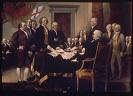
In the course of human events, no political document has proven more influential than that of America’s Declaration of Independence. While it has become commonplace for contemporary historians to mark the “inalienable rights” section of the declaration as the primary source of its strength and longevity, this interpretation tends to oversimplify the breadth of the document’s genius. In truth, mankind’s rights to life, liberty and the pursuit of happiness were not unique to American philosophy; to the contrary, these were the guiding principles of the European enlightenment, best espoused by such social commentators as John Locke and Voltaire.
What made America’s founding generation so unique and what was preserved for posterity in the nation’s “Declaration”, was the relationship between these God-given rights and their practical application in government. European governments, including those that embraced the theories of the Enlightenment, were ruled by Kings who played the part of “demi-gods” on Earth. It was these Kings who were expected to act as the middlemen between God and the masses, essentially assuming the powers of Heaven while redistributing “rights” to the people. Herein lies the true revolution that was born in American Independence: That all mankind has an equal right to compete for a station in life, to pursue happiness, to bear the fruits of his labor; that these rights cannot be assigned nor revoked by any mere king or tyrant, that they are, in fact, inalienable. Governments may be instituted among men to “secure these rights” but only by the consent of the governed. In other words, no government has the moral authority to distribute the rights of others.
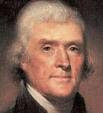
The Declaration of Independence is both a moral and political document. Thomas Jefferson, after making the moral case for American Independence and the natural rights of mankind, proceeded to enumerate the political acts of King George III that served to violate these rights, eventually leading to America’s separation from the motherland.
As the past two decades of American history have been marked by a frenetic expansion, both in size and in scope, of our nation’s federal government, it is little wonder that popular uprisings such as the Tea Party Movement have proven so influential. In fact, when reading the list of grievances put forth by Jefferson in the Declaration of Independence, one cannot help but notice the stark similarities between the actions of King George III and the Obama Administration and their shared conception of their respective roles as magistrates.
To wit:
“He [King George III] has forbidden his Governors to pass laws of immediate and pressing importance,” claiming his authority and ability do deal with such matters “he has utterly neglected to attend to them.” Note the Department of Justice’s stubborn interference in border- state immigration laws and President Obama’s subsequent dithering on the issue.
“He has erected a multitude of new offices,” serving to consolidate his power with appointed officials. Note the expansion and appointments of nonelected government “czars” from 2009 to the present, unparalleled in our nation’s post-revolution history.
Jefferson goes on to enumerate the King’s malfeasance “for cutting off our trade with all parts of the world,” (President Obama has consistently evaded signing free-trade agreements with Colombia, Panama and South Korea irrespective of their economic benefits.) “for imposing taxes on us without our consent,” (note the nationwide disapproval of Obama-Care) and for “altering fundamentally the forms of our governments”. (The Patient and Affordable Care Act, if not disavowed by the Supreme Court, will render America’s federal government limitless in power and scope.)
While President Obama has certainly not emulated King George’s proclivity for suppressing discord with violence, he has, in fact, committed many acts that are offensive to American sensibilities. By positioning himself as a middleman between Americans and the natural rights of mankind, he has violated our founding tenets. What was true in 1776 remains true today: The American people do not require, nor do they want, a demi-god to provide for their sustenance by distributing their collective wealth. Rather, we are a people culturally rooted in fierce individualism and a strong desire to earn our own station in life. Our Founding Fathers understood this and were keenly aware that these uniquely American strengths would allow this nation, conceived in liberty, to lead the way in a global revolution.
Now, two hundred and thirty-five years later, the defining principles of the American Revolution are, once again, in jeopardy. Fortunately, the nation’s Founders went on to write a Constitution that would allow future generations of Americans to revolt by a different means; the ballot has replaced the bullet. Yet, as was the case with King George III, so it is with President Obama. The American people have had enough. A new revolution is underway.
Jeremy Pitcoff
Friday, August 12, 2011

Monday, May 30, 2011
2012: Year Of The Dark Horse Candidate
2012: Year Of The Dark Horse Candidate
For good or otherwise, the presidential election of 2012 will determine the fate of America. At the present time, there are three foreseeable outcomes for what is certain to be a heated contest between modern progressivism on the one hand and constitutional conservatism on the other. Option one is the reelection of incumbent President, Barack Obama, a Progressive victory that would seal America’s fate as a nation dominated, both economically and socially, by the dictates of the federal government. Option two, in contrast, would entail the election of a yet to be named Reagan conservative who, with steadfast conviction, could work with Congress to methodically reverse the expansive powers of the federal government that have steadily increased over the course of the past two decades. Option three presents a “moderate” Republican capturing the presidential prize, rendering our nation’s future less predictable.
America has arrived at the point where its national debt ($14.4 trillion) cannot be sustained by the taxes raised through its gross domestic product. Accordingly, with each passing year, the debt will increase at levels exceedingly higher than that of the preceding year. The only option for reversing this trend would be a thorough overhaul of the driving forces of the debt, followed by a series of tax-cut initiatives aimed at spurring and maintaining strong economic growth.
As two-thirds of all public spending in America is allocated to entitlement and safety net programs, and as President Obama has refused to recognize the impending collapse of these systems in their current form and has actively participated in adding to the unsustainable nature of these programs via Obama-Care, there is little chance that a second Obama Administration would help to curb America’s economic descent. Tax-cuts are certainly out of the question from the likes of a President who has spent most of his time in office pontificating on the redistribution of wealth and the inherent greed of capitalism.
Party backed Republican moderate, Mitt Romney and inside-the-beltway conservative of yesteryear, Newt Gingrich, offer America a future that would appear only slightly more prosperous than that of its present condition. While both presidential contenders deserve credit for their advocacy of corporate and individual tax-reform, both gentlemen seem to possess philosophical convictions that run contrary to the will of the people. Mr. Romney, while governor of Massachusetts, created a health care system that is widely recognized as the precursor to Obama-Care. While Romney-Care does not violate the U.S. Constitution, as does its federal twin, due to the broad constitutional powers granted to the states, it is nonetheless indicative of Mr. Romney’s overall view of the role of government in America. Newt Gingrich, once a brave steward of constitutional conservatism, now adamantly supports government subsidies for ethanol and federal usurpation of individual freedoms of commerce.
While the Republican Party has managed to produce effective conservative leadership in the federal legislature vis-à-vis Wisconsin Congressman Paul Ryan and Florida Senator Marco Rubio, it has yet to unite around a viable conservative for president. And while it is quite possible that a Romney or Gingrich presidency might serve America well, if only because neither of these leaders would likely veto the reformative initiatives of a conservative Congress, it is a scenario ensconced with risk and should be avoided, if possible, by Republicans.
So where are the conservative candidates? Reagan Republicans and Tea Party Activists need not fret just yet. American history provides several instances of late entry, “dark horse” candidates. These are candidates who, historically speaking, have surfaced amid exceptionally divisive times, and who have proven to be remarkably effective leaders; note Abraham Lincoln and James K. Polk. Because “dark horse” candidates are more a product of the people than of the party, they tend to answer to the people’s will more than to the will of the establishment.
Two names to look for, both newly elected governors, both effective leaders with strong conservative credentials and proclivities for pragmatic reform: John Kasich of Ohio and Chris Christie of New Jersey. Neither of these governors is currently on the presidential radar, primarily because neither has expressed an interest in becoming president. Public duty, however, has a funny way of impacting on a person’s mind. Have faith conservatives – we just may find our dark horse candidate yet.
For good or otherwise, the presidential election of 2012 will determine the fate of America. At the present time, there are three foreseeable outcomes for what is certain to be a heated contest between modern progressivism on the one hand and constitutional conservatism on the other. Option one is the reelection of incumbent President, Barack Obama, a Progressive victory that would seal America’s fate as a nation dominated, both economically and socially, by the dictates of the federal government. Option two, in contrast, would entail the election of a yet to be named Reagan conservative who, with steadfast conviction, could work with Congress to methodically reverse the expansive powers of the federal government that have steadily increased over the course of the past two decades. Option three presents a “moderate” Republican capturing the presidential prize, rendering our nation’s future less predictable.
America has arrived at the point where its national debt ($14.4 trillion) cannot be sustained by the taxes raised through its gross domestic product. Accordingly, with each passing year, the debt will increase at levels exceedingly higher than that of the preceding year. The only option for reversing this trend would be a thorough overhaul of the driving forces of the debt, followed by a series of tax-cut initiatives aimed at spurring and maintaining strong economic growth.
As two-thirds of all public spending in America is allocated to entitlement and safety net programs, and as President Obama has refused to recognize the impending collapse of these systems in their current form and has actively participated in adding to the unsustainable nature of these programs via Obama-Care, there is little chance that a second Obama Administration would help to curb America’s economic descent. Tax-cuts are certainly out of the question from the likes of a President who has spent most of his time in office pontificating on the redistribution of wealth and the inherent greed of capitalism.
Party backed Republican moderate, Mitt Romney and inside-the-beltway conservative of yesteryear, Newt Gingrich, offer America a future that would appear only slightly more prosperous than that of its present condition. While both presidential contenders deserve credit for their advocacy of corporate and individual tax-reform, both gentlemen seem to possess philosophical convictions that run contrary to the will of the people. Mr. Romney, while governor of Massachusetts, created a health care system that is widely recognized as the precursor to Obama-Care. While Romney-Care does not violate the U.S. Constitution, as does its federal twin, due to the broad constitutional powers granted to the states, it is nonetheless indicative of Mr. Romney’s overall view of the role of government in America. Newt Gingrich, once a brave steward of constitutional conservatism, now adamantly supports government subsidies for ethanol and federal usurpation of individual freedoms of commerce.
While the Republican Party has managed to produce effective conservative leadership in the federal legislature vis-à-vis Wisconsin Congressman Paul Ryan and Florida Senator Marco Rubio, it has yet to unite around a viable conservative for president. And while it is quite possible that a Romney or Gingrich presidency might serve America well, if only because neither of these leaders would likely veto the reformative initiatives of a conservative Congress, it is a scenario ensconced with risk and should be avoided, if possible, by Republicans.
So where are the conservative candidates? Reagan Republicans and Tea Party Activists need not fret just yet. American history provides several instances of late entry, “dark horse” candidates. These are candidates who, historically speaking, have surfaced amid exceptionally divisive times, and who have proven to be remarkably effective leaders; note Abraham Lincoln and James K. Polk. Because “dark horse” candidates are more a product of the people than of the party, they tend to answer to the people’s will more than to the will of the establishment.
Two names to look for, both newly elected governors, both effective leaders with strong conservative credentials and proclivities for pragmatic reform: John Kasich of Ohio and Chris Christie of New Jersey. Neither of these governors is currently on the presidential radar, primarily because neither has expressed an interest in becoming president. Public duty, however, has a funny way of impacting on a person’s mind. Have faith conservatives – we just may find our dark horse candidate yet.
Subscribe to:
Posts (Atom)
Subscribe To: If You Can't Be Free, Be As Free As You Can


 Posts
All Comments
Posts
All Comments
Jeremy Pitcoff & Governor Mike Huckabee