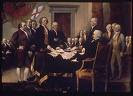
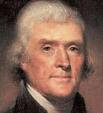
“Wise and frugal government, which shall leave men free to regulate their own pursuits of industry and improvement, and shall not take from the mouth of labor the bread it has earned – this is the sum of good government.” Thomas Jefferson feared that government infringement upon the people’s right to the freedoms of commerce and of trade, would eventually destroy our republic. Free market capitalism and American democracy are forever and permanently linked. One cannot exist without the other. America is the only government, known to man, specifically designed to limit its own influence. Our elected leaders are subject to the approval of the public and beholden to the will of their constituencies. Virtually every word written in the U.S. Constitution demonstrates the Founder’s intent to protect the American people from tyranny. Freedom of commerce was considered to be as essential to our democracy as any of the more celebrated liberties.
Article 1, section 8 of the U.S. Constitution, enumerates the specific and limited powers granted to the federal Congress. The Senate and the House of Representatives are allowed the ability to create all laws deemed “necessary and proper” for carrying into execution these limited powers. This “necessary and proper” clause was worded as such, due to the Founding Fathers’ belief that the Constitution should not be rigidly structured. In the rapidly changing world of late 18th century America, the Founders were keenly aware of the role modernity would play in the evolving perceptions of contemporaries and wished to leave room for discretion. However, the Founders still deemed it necessary to add what is known as “congressional limitations” to the text of America’s Constitution. Article 1, section 9, clearly enumerates the limits of federal power that the Founding Fathers viewed as essential to the survival of the Constitution; it acts as a prelude to the Bill of Rights.
Of the seven enumerated limits of Congress listed in article 1, section 9; three are dedicated to issues relating to commerce: 1. “No tax or duty shall be laid on articles exported from any state.” This was added to insure free trade for American merchants and to promote a global U.S. economy. 2.”No preference shall be given by any regulation of commerce or revenue to the ports of one state over those of another.” This clause was inserted to limit the ability of the federal government to influence the votes of any state or geographic region via the power of the purse. 3. “No money shall be drawn from the treasury, but in consequence of appropriations made by law.” This was to affect a more virtuous government where representatives’ votes could not be bought with taxpayer funds and to insure that its elected officials would be held accountable for their actions.
Clearly, the Founding Fathers sensed the direct correlation between the people’s right to freedom of commerce and the perpetuation of American democracy. When a government controls the commerce of its citizenry, these citizens then become its subjects; those who control the money, by default, control the people. It is worth noting that nearly every world dictator who has successfully overthrown a democracy has achieved this by one of two methods - by war, or by the implementation of socialism. When a people’s livelihood is dependent on the whims of government, democracy cannot long endure. Human nature dictates that people will not bite the hand that feeds them. This subjection to the government's will, is exactly what the Founders had feared. It is this scenario that encouraged the Founders to limit the government’s control over commerce and trade in America.
Is it any wonder then, that in the year 2010, the Tea Party Movement is flourishing in America? The Obama Administration’s policy of oppressive taxation on commercial industry, coupled with massive entitlement spending, is an existential threat to our democracy. As American private sector employment is rapidly diminishing, the scope of our government is multiplying. Excessive burdens on our commercial class are allowing for a de facto public takeover. Due to the policies of the Obama Administration and our current congressional leadership, the private sector can no longer compete with its public counterpart. This leaves small businesses and corporations at the mercy of our federal government and eliminates their ability to create jobs and to invest in future enterprise. With the unemployment rate at nearly 10%, more and more Americans now look to their government for aid. If this trend is not reversed in the near future, it will irreparably damage our nation. America may become a true welfare state with its people beholden to its government and its traditional work ethic negated.
Obama-Care, the Dodd financial reform bill, cap & trade and many other initiatives, all foretell the end of commercial freedom in America. While the Obama White House will tell you these are necessary measures designed to nurture the American people, the Constitution will tell you otherwise. In the words of Alexander Hamilton, a chief architect of our Founding document, “The power over a man’s subsistence, amounts to the power over his will”. The White House has initiated a constitutional rebellion; the people must now subdue it. They must vote into office, at every level of government, true representatives of the people. Freedom of commerce is a constitutional right that must prevail to sustain our democracy.
Jeremy Pitcoff
Smithtown Republican Committeeman
Wednesday, June 23, 2010

Wednesday, June 16, 2010
My Republican Party
The Republican Party that I belong to is the party of freedom; freedom of speech, religion and the press; freedom of commerce for individuals, for markets and for trade; freedom of choice in the schools and at home. It is the party of small government; of maximum individual liberties consistent with law and order. To insure these freedoms, my Republican Party advocates a strong national defense based on missile defense, technological superiority and a military strategy prepared for any and all contingencies. History has proven that an America most prepared for war is an America least likely to have to enter one.
It is hard to imagine a greater challenge to Republican values than the presidency of Barack Obama and the reign of House Speaker Nancy Pelosi and Senate Majority Leader Harry Reid. The scope of our government is expanding at a record pace while individual autonomy is diminishing. As the November midterm elections approach, Republicans, nationwide, face a split within their ranks. The reformist and regressive wings of the party are battling for dominance within the organization. The reformist Republicans seek to nominate candidates with strong, conservative values and coherent plans to fix what is broken and undo what was done. The regressive Republicans differ by offering moderate candidates who they believe are more likely to win the upcoming elections. The regressive candidates will stop the nation’s bleeding while the reformers will eliminate the wound. It is an intraparty battle between political expediency and ideological fortitude; between fighting for a cause and fighting for fighting’s sake.
Leaders of the reformist Republican movement have refused to steer off course. They have maintained an offensive posture, believing their vision of America to be the key to its salvation. Paul Ryan and Eric Cantor have consistently offered comprehensive alternatives to high taxes, big government and runaway spending. They seek to elect strong, conservative candidates throughout the nation who will better represent their party’s values. Their moderate counterparts, such as Lindsey Graham and John Cornyn are recruiting candidates with a more conciliatory posture and a less confrontational stance. These regressive Republicans, though sympathetic to the reformists’ cause, are willing to placate the administration in hopes of achieving their more modest agenda through attrition rather than conflict. Thus, many summer primaries will likely decide the future of the party and the nation as a whole.
Appeasement is never a viable option for those who seek reform. My Republican Party is the party of Abraham Lincoln, devoted to the ideals of the Declaration of Independence. It is the party that will relentlessly fight to achieve those ideals while maintaining due respect for our Constitution. My Republican Party is the party of Ronald Reagan, who simply could not accept a decline in American exceptionalism, as was the inclination of his predecessor. He knew in his heart that America’s moral superiority was the key to its survival. My Republican Party knows that ours is a nation whose government is beholden to its people and not to its heads of state; that individuals and communities are the sources of its strength and the masters of its fate. My Republican Party trusts the people to trust themselves and exemplifies the values of our representative republic.
Election Day, 2010, will decide the fate of our country for many years to come. The people of America will decide whether they want an ever-expanding, omnipotent government or a shift back to the vision of its founders. The mission of my party, as I see it, is to insure that the people are offered this choice; to provide a clear alternative to big-government rule. The task at hand is to nominate candidates, at every level of government, who will better represent the values of their constituents and provide them with a voice in the affairs of our nation. My Republican Party, with roots in conservatism and sweeping reform, will pass to the public the political megaphone and reassert the power of the American people; for mine is the party that is keenly aware that when the voice of the people is silenced………liberty is lost.
Jeremy Pitcoff
Smithtown Republican Committeeman
Subscribe to:
Posts (Atom)
Subscribe To: If You Can't Be Free, Be As Free As You Can


 Posts
All Comments
Jeremy Pitcoff & Governor Mike Huckabee